
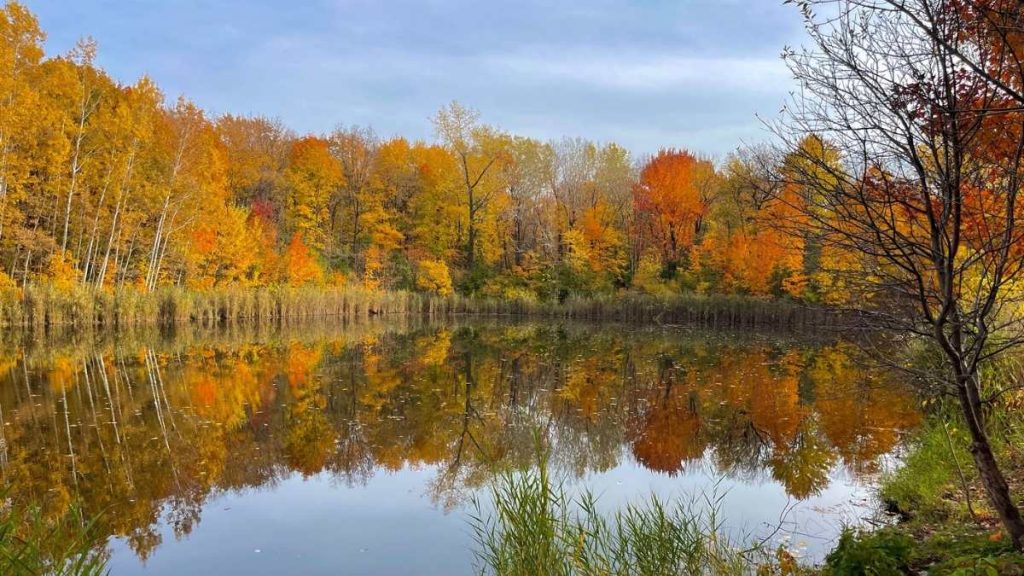
The idea of merging Angrignon Park with the Bois-des-Caryers in the borough of LaSalle is resurfacing, but faces obstacles.
While Angrignon Park benefits from significant infrastructure investments, the Bois-des-Caryers is designated as a conservation site, calling the project's feasibility into question.
The discussion continues, paving the way for compromises focused on accessibility rather than full integration.
At the heart of Montreal's great southwest, Angrignon Park and the Bois-des-Caryers represent two distinct green spaces, though geographically close.
While Angrignon Park is a large 97-hectare urban park with vast clearings and a pond, the Bois-des-Caryers, located at the western end, is a conservation site that plays an important ecological role.
The idea of connecting them to create a larger, more connected green space has re-emerged, sparking interest from residents.
Challenges and Data to Consider
Urban park projects have significant impacts, particularly on foot traffic and the local economy.
Although specific foot traffic numbers for the Bois-des-Caryers are not available, similar urban revitalization projects show a significant increase in visitors.
The potential integration of the Bois-des-Caryers could diversify the recreational offerings of Angrignon Park and attract a wider audience, while strengthening the role of the borough of LaSalle as a green destination.
However, key data raises concerns:
Ecological obstacle: The borough of LaSalle opposes a complete integration of the Bois-des-Caryers.
It is classified as a wetland and a conservation site, making it incompatible with redevelopment as a traditional recreational park.
History: The division of the two plots dates back to 1954, when a railway separated the Bois-des-Caryers from the rest of Angrignon Park.
The transfer of the land at the time allowed LaSalle to take over its management in exchange for a plot for Montreal.
A Compromise under Discussion
Despite the reluctance, the door is not completely closed.
The mayor of LaSalle has expressed her openness to a compromise, proposing to improve access to Angrignon Park via the Bois-des-Caryers rather than a complete merger.
This approach would reconcile the increase in visitors with the preservation of the unique and fragile character of the conservation site.
This discussion is part of a wave of major investments in the city's green spaces. Angrignon Park has also benefited from significant projects:
The renovation of the Forêt Pavilion cost $1.5 million.
Major redevelopment work with a budget of $2.8 million was announced to improve the trails, lighting, and biodiversity.
The construction of a large pedestrian bridge was completed to connect LaSalle to the park.
In conclusion, the question of integrating the Bois-des-Caryers into Angrignon Park highlights the dilemma between urban development and environmental preservation.
While full integration seems compromised, improving the connection between the two spaces offers a balanced solution that could benefit residents while protecting a precious ecosystem.